
Treatments
Dermaplaning Myths Debunked: Does Peach Fuzz Grow Back Thicker?
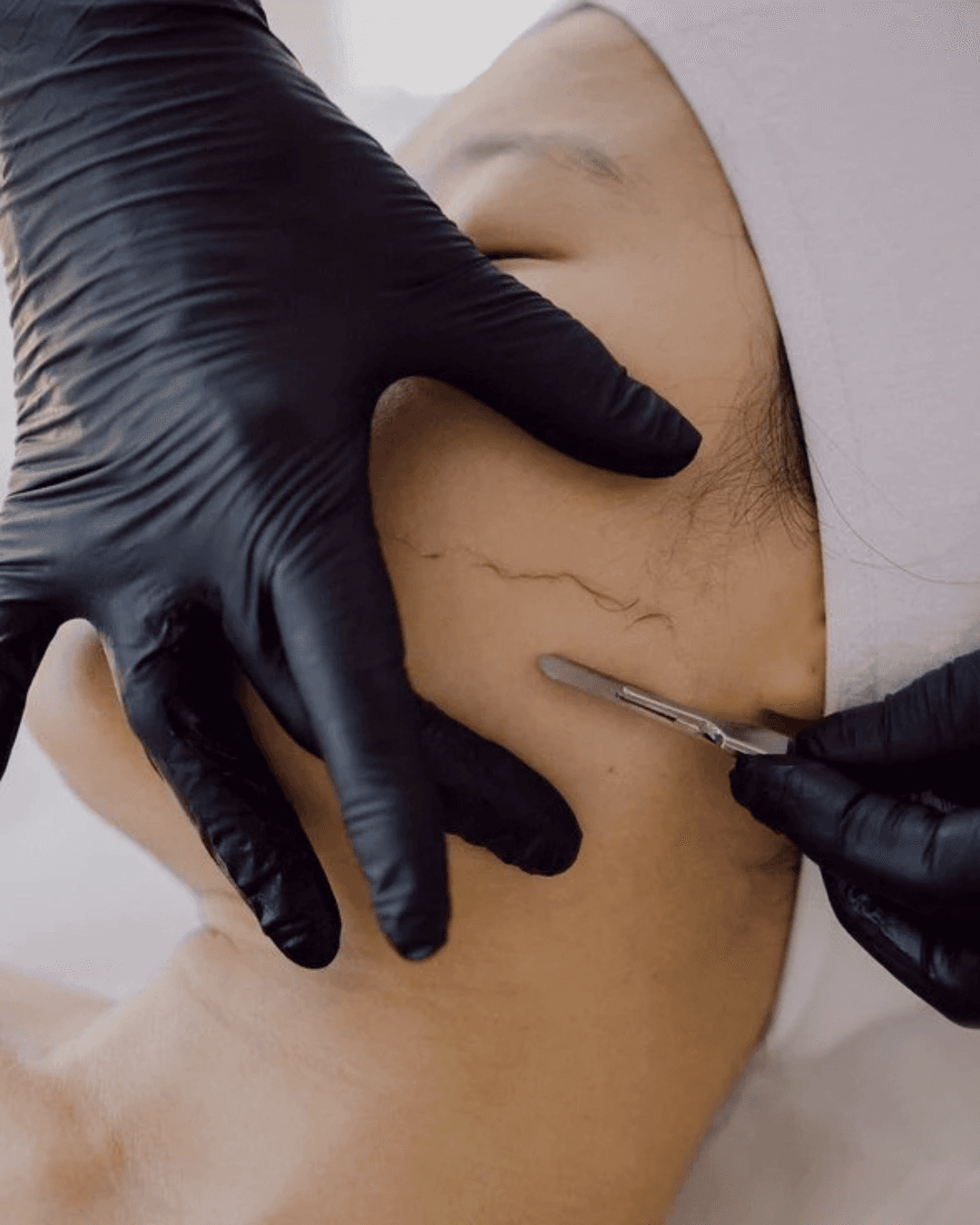
If you've ever been curious about dermaplaning but held back because of something you heard — you're not alone. This treatment is one of the most talked-about facials in skincare, and unfortunately, one of the most misunderstood. Between social media rumors and outdated advice, it can be hard to separate fact from fiction.
As a licensed esthetician, I hear the same concerns from clients at all three of my Bay Area locations — San Jose, Palo Alto, and Menlo Park. So let's set the record straight and debunk the most common dermaplaning myths once and for all.
What Is Dermaplaning?
Dermaplaning is a professional exfoliation treatment where a licensed esthetician uses a sterile surgical scalpel held at a 45-degree angle to gently glide across the surface of the skin. It removes two things at once: the outermost layer of dead skin cells and fine vellus hair — commonly known as peach fuzz.
The result? Instantly smoother, brighter skin with zero downtime.
It sounds simple, but the technique matters enormously — which is why dermaplaning should always be performed by a trained professional, never at home with a drugstore razor.
Myth #1: Peach Fuzz Grows Back Thicker and Darker After Dermaplaning
The truth: It doesn't. This is the biggest myth in skincare.
Hair thickness and color are determined by the hair follicle not by cutting or removing the hair at the surface. Dermaplaning only removes vellus hair at skin level. It does not touch, damage, or stimulate the follicle in any way.
What gives the illusion of thicker regrowth is the blunt tip left behind when hair is cut (as opposed to the naturally tapered tip of untouched hair). But the hair that grows back is chemically and structurally identical to what was there before.
Vellus hair — the fine, soft, nearly colorless fuzz on your face — will never transform into terminal hair (the thick, pigmented hair found on your scalp or eyebrows) from dermaplaning. That transformation is driven by hormones, not by anything done to the surface of the skin.
Bottom line: Your peach fuzz will grow back exactly as it was. Softer and finer than ever.
Myth #2: Dermaplaning Causes Breakouts
The truth: Dermaplaning does not cause acne but timing and technique matter.
Dermaplaning does not introduce bacteria into the skin or clog pores. In fact, the opposite is true: by removing dead skin cells and debris, it can actually help prevent the buildup that leads to breakouts.
However, dermaplaning is not recommended for active acne. Using a blade over inflamed pustules or cysts can spread bacteria and irritate the skin further. This is why a professional consultation matters — your esthetician will assess your skin before every session and skip areas of active breakouts when needed.
If you have congestion-prone or acne-prone skin but not active acne, dermaplaning can be a great option and may even help improve your skin's texture over time.
Myth #3: Dermaplaning Is Only for People with a Lot of Facial Hair
The truth: Dermaplaning is beneficial for all skin types, even if you barely have any peach fuzz.
The vellus hair removal is a bonus but the real star of the show is the exfoliation. Removing that layer of dead skin cells reveals a fresher, more luminous complexion beneath, enhances skincare product absorption by up to 80%, and creates a flawless base for makeup application.
Even clients who have very fine, barely-there peach fuzz leave treatments looking visibly more radiant. The hair is just part of the story.
Myth #4: Dermaplaning Is Painful
The truth: Most clients describe it as relaxing — some even fall asleep.
The sensation is often compared to a soft shaving motion across the skin. There is no pulling, no stinging, and no heat. The scalpel is sterile and sharp, which actually makes it feel smoother than you'd expect.
Dermaplaning has zero downtime. You can walk out of your appointment and go straight to dinner with no redness, peeling, or irritation.
Myth #5: You Can Just Dermaplane at Home
The truth: Home dermaplaning tools are not the same and carry real risks.
Drugstore dermaplaning razors are far less precise than the surgical-grade scalpels used by licensed estheticians. Without professional training, it's easy to apply uneven pressure, use the wrong angle, or nick the skin — especially around the jaw, upper lip, and nose.
More importantly, a professional dermaplaning session includes a full skin assessment, prep, and post-treatment care that maximizes results and protects your skin. The treatment itself is only part of what makes it effective.
If you want real results, skip the at-home shortcut and book with a professional.
Who Is Dermaplaning Best For?
Dermaplaning is a great fit if you:
- Have dry, dull, or uneven skin texture
- Want a bright, glowing complexion with no downtime
- Notice that your makeup sits on top of your skin rather than blending seamlessly
- Are pregnant (many chemical peels and other treatments are not pregnancy-safe —
dermaplaning is a gentle alternative)
- Have mild hyperpigmentation or rough texture from sun damage
It is not recommended if you have active acne, rosacea flare-ups, extremely sensitive or reactive skin, or open wounds.
How Often Should You Get Dermaplane?
Most clients see their best results with treatments every 4 to 6 weeks, which aligns with the natural skin cell turnover cycle. This cadence keeps your skin consistently smooth and glowing without over-exfoliating.
During your first appointment, your esthetician will assess your skin and recommend a schedule that works for your specific skin type and concerns.
Ready to Try Dermaplaning?
Now that the myths are out of the way, you can book with confidence. Dermaplaning is one of the most satisfying treatments I offer — clients see an immediate, visible difference in how their skin looks and feels.
I offer dermaplaning at all three of my Bay Area locations:
- Palo Alto, CA at Elisha Marie Skin & Body — Tuesdays & Wednesdays
- San Jose, CA at Luminance Regenerative Beauty & Wellness — Mondays, Thursdays & Fridays
- Menlo Park, CA at Entre Nous Aesthetics — Tuesdays & Saturdays
Book your dermaplaning appointment today and leave with the smoothest, most radiant skin of your life.